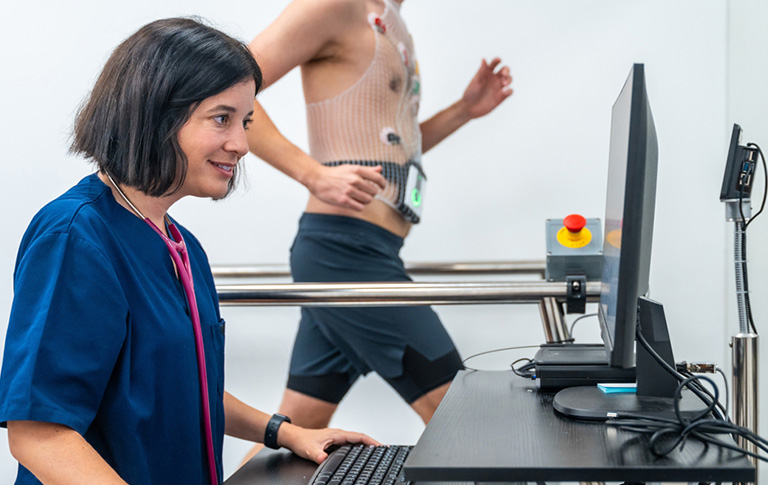

A cardiac stress test, also called a heart stress test, assesses how the heart responds to exertion and increased workload. It is commonly used to evaluate symptoms such as chest discomfort, breathlessness, reduced exercise tolerance, or unexplained fatigue during activity.
Unlike tests performed at rest, stress testing provides information about how the heart performs under physical demand. This can reveal changes in heart rhythm, blood pressure response, or evidence of reduced blood flow that may not be apparent during routine examination.
Dr Sophia Wong recommends stress testing selectively, when it is expected to clarify a specific clinical question and meaningfully guide management.
A heart stress test may be considered to:
Not all chest symptoms require stress testing. The decision to proceed is guided by individual risk factors, symptom patterns, and results of prior investigations. In many cases, alternative tests may be more appropriate.
Most cardiac stress tests involve walking on a treadmill while heart rhythm, blood pressure, and symptoms are monitored. The intensity of exercise increases gradually in stages, allowing the heart to be assessed under controlled conditions.
In some cases, imaging such as echocardiography may be combined with stress testing to provide additional information. This is determined based on the clinical question being addressed.
A common question is how long a stress test takes. The exercise portion usually lasts between 6 and 12 minutes, depending on fitness level and symptoms. Including preparation and recovery time, the full appointment may take approximately 30 to 45 minutes.
Your cardiologist will explain the purpose of the test, how it will be conducted, and what the results may help clarify.
Stress testing is not performed routinely. It is used when it is likely to provide information that influences diagnosis or treatment decisions. Results are interpreted in conjunction with symptoms, medical history, physical examination, and other investigations.
Normal stress test results can be reassuring, particularly when symptoms are concerning but structural or obstructive disease is unlikely. Abnormal findings are assessed carefully to determine whether further investigation or management is appropriate.
Dr Wong’s approach prioritises appropriate investigation, clear explanation of results, and integration of findings into the broader context of each person’s health.